The Future of Quantum Computing: What It Means for Technology and Society
The Future of Quantum Computing: What It Means for Technology and Society January 18, 2025 10:49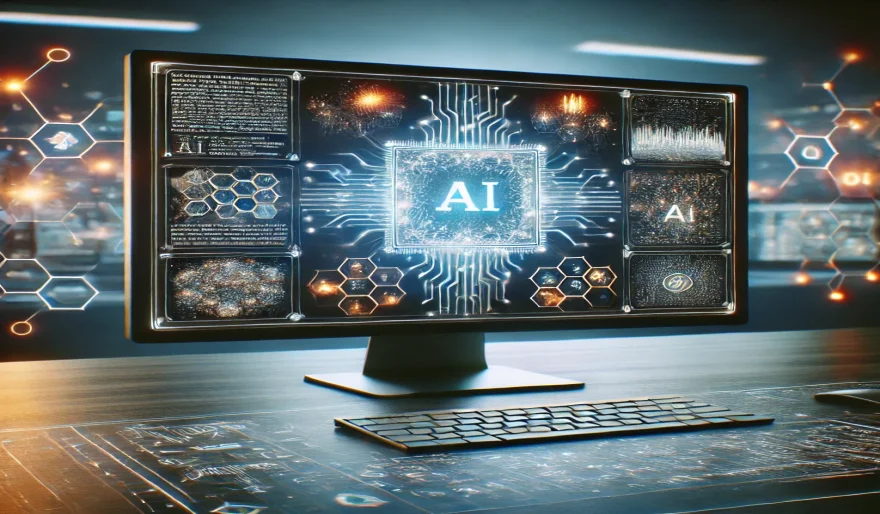
I. Introduction
In the past few years, the world has witnessed the rapid rise of artificial intelligence (AI) in various industries, and one area where it's making a major impact is in content creation. Generative AI, a subset of artificial intelligence, is reshaping how we approach content production—whether it's for blogs, advertisements, artwork, videos, or even music. By harnessing machine learning models, generative AI can now create high-quality content that mimics human creativity at a fraction of the time and cost. This article explores how generative AI is transforming content creation in 2025, its potential, and the challenges it brings.
II. Understanding Generative AI
Generative AI refers to algorithms and machine learning models that can create new content, such as text, images, music, and videos, based on existing data. These models are trained on large datasets to learn patterns and structures, allowing them to generate outputs that seem "creative" or novel. Some of the most popular examples of generative AI include OpenAI's ChatGPT for text generation, DALL·E for image creation, and MuseNet for music composition.
By mimicking human-like creative processes, generative AI is making a significant impact on various industries. But how does it really work, and why is it revolutionizing content creation?
III. How Generative AI is Changing Content Creation
Efficiency and Speed
One of the most notable advantages of generative AI is its ability to create content quickly. What once took hours, or even days, can now be completed in mere minutes. Whether it’s drafting a blog post, writing an ad copy, or designing an image, AI can speed up the process dramatically, allowing creators to meet tight deadlines without sacrificing quality.
Personalization
Generative AI can craft personalized content tailored to specific audiences. Through advanced algorithms, AI analyzes user behavior and preferences, and adapts its content to match individual needs. This leads to higher engagement rates and better-targeted marketing strategies, making it easier for businesses to connect with their audiences in meaningful ways.
Enhanced Creativity
Generative AI helps creatives push boundaries by generating unique ideas and concepts that might not have been explored otherwise. Artists and designers can use AI tools to inspire new works or expand on their initial concepts. It opens up an entirely new avenue for experimentation, offering an endless supply of creative possibilities that go beyond human limitations.
Cost-Effective
With the ability to generate high-quality content without the need for extensive human resources, generative AI reduces production costs for businesses. Marketing agencies, media companies, and other industries that require regular content creation can now rely on AI tools to produce work efficiently and affordably, freeing up their teams for more strategic tasks.
IV. Real-World Applications in Content Creation
Generative AI has numerous practical applications that are already being implemented across various sectors. Here's how it's being used in real-world content creation:
Blogging and Writing
AI tools like ChatGPT have been a game-changer for bloggers, content writers, and copywriters. They can now generate SEO-optimized content, from articles to product descriptions, with just a few prompts. The AI provides an initial draft, which the writer can then refine or edit, saving time and reducing writer’s block.
Marketing and Ads
Marketing teams are increasingly turning to generative AI to create compelling ad copy and campaign content. By analyzing trends, customer preferences, and industry insights, AI can generate content that resonates with target audiences. The result is more efficient ad creation that boosts engagement and conversions.
Design and Art
Designers are utilizing AI to create visual assets like logos, illustrations, and even branding materials. Tools like DALL·E and other design AI platforms generate unique images based on text prompts, opening up new possibilities for graphic designers. AI-generated art is also becoming popular in entertainment and digital art spaces, with artists using AI to explore new aesthetics.
Video and Music Production
AI’s role in video and music production is growing rapidly. AI-powered platforms can now generate videos with scripts, voiceovers, and visuals, streamlining the production process. In music, AI models can compose original tracks, mixing genres and styles to create something fresh and new.
V. Challenges and Ethical Considerations
While generative AI has revolutionized content creation, it does come with its share of challenges and ethical concerns:
Copyright Issues
AI-generated content raises questions about copyright ownership. Who owns the content created by an AI? Is it the developer of the AI model, the user who prompted the AI, or no one at all? As generative AI becomes more prevalent, these questions will become increasingly important.
Quality Control and Authenticity
Although generative AI produces impressive content, it still lacks the nuanced understanding and emotional intelligence that human creators bring to their work. Sometimes, AI-generated content may feel robotic or lack the "human touch" that many audiences prefer. Ensuring content quality and authenticity remains a challenge for businesses and creators.
Job Displacement
As AI continues to automate more aspects of content creation, some fear that it will lead to job displacement in creative fields. While AI can assist in many areas, it still requires human oversight and input to ensure the output meets industry standards. Finding a balance between human creativity and AI assistance is essential to preserving jobs while benefiting from technological advancements.
VI. The Future of Generative AI in Content Creation
Looking ahead, the potential for generative AI in content creation is vast. As the technology continues to evolve, we can expect even more sophisticated tools that push the boundaries of creativity. In the near future, we may see AI systems capable of creating entirely original and unique works of art, music, and literature that rival those produced by humans. However, it's important to maintain a collaborative approach, where AI is used as a tool to enhance, rather than replace, human creativity.
VII. Conclusion
Generative AI is undoubtedly transforming content creation in 2025. From enhancing creativity to improving efficiency, it's reshaping how we produce and consume content. However, as with any innovation, there are challenges and ethical considerations that need to be addressed. As businesses and creators navigate this rapidly changing landscape, the key will be to strike a balance between leveraging AI for its benefits and preserving the irreplaceable value of human creativity.
As AI continues to evolve, it will be exciting to see how it further revolutionizes the creative process and opens up new opportunities for industries worldwide.
User Comments (0)
Popular Apps